
Navigating the world of beauty can sometimes feel like trying to crack a complex scientific code. You buy all those magical little dropper bottles, bring them home, and suddenly realize you have absolutely no idea how they work together. If you’re worried about melting your face off by mixing the wrong acids, you’re exactly where you need to be. Today, we’re tackling the most common question I get in my inbox: Can you use Vitamin C and retinol together? A beginner’s guide.
I remember standing in the middle of a Boots pharmacy years ago, frantically Googling this exact question on my phone. I had a basket full of expensive active ingredients and was suddenly struck by the fear of a massive chemical burn. The skincare community has historically been sharply divided on whether these two powerhouse ingredients should ever cross paths.
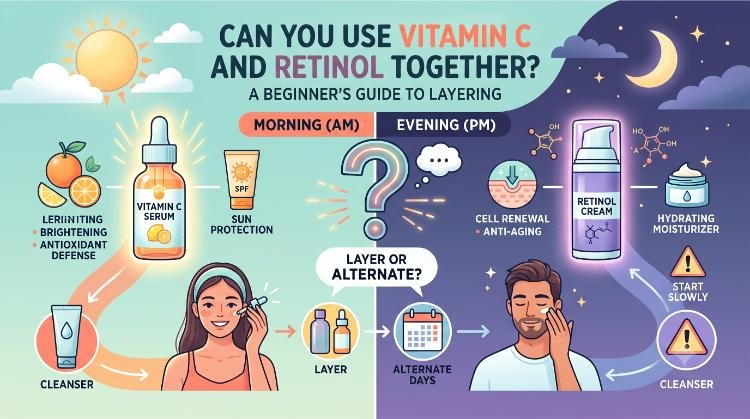
Let me clear up the confusion for you right here, right now. Yes, you absolutely can use them in the same routine—and honestly, you really should. When paired correctly, they form the ultimate dream team for radiant, youthful, and incredibly resilient skin.
Breaking Down the Powerhouses
Before we start slapping serums onto our faces, we need to understand what we’re actually working with. Both of these ingredients are incredibly potent, meaning they demand a certain level of respect. Slapping them on haphazardly is a recipe for an irritated, compromised moisture barrier.
Why do we love Vitamin C?
Think of this antioxidant as your invisible daily shield against the harsh outside world. It actively fights free radicals caused by heavy pollution—like that found in London—and daily UV exposure. I rely heavily on it to give my dull morning complexion an instant shot of radiance and vitality.
Beyond just environmental protection, it actively inhibits the production of abnormal pigmentation. If you struggle with dark spots left behind by old blemishes, this ingredient acts like a targeted eraser. It leaves you with that highly coveted, luminous “glass skin” we all desire.
The Magic of Retinol
Retinol, a potent derivative of Vitamin A, is the absolute gold standard in anti-aging skincare. It works by aggressively accelerating your natural cellular turnover rate. Essentially, it makes your skin behave the way it did when you were ten years younger.
It pushes fresh, new skin cells to the surface while simultaneously stimulating collagen production deep within. I always tell my readers that this is one active ingredient that truly lives up to the marketing hype. It tackles everything from stubborn fine lines and enlarged pores to frustrating hormonal breakouts.
To keep your complexion perfectly hydrated while actively treating breakouts, learn exactly How to Layer Salicylic Acid and Hyaluronic Acid Safely without compromising your moisture barrier.
How to Safely Layer Vitamin C and Retinol
The main reason people are wary of mixing the two is their conflicting pH levels. Historically, cosmetic chemists warned that pairing them would immediately neutralize their skin-enhancing benefits. Thankfully, modern formulations are incredibly stable, yet I still advocate for a specific application strategy.
If you want to know how to layer Vitamin C and retinol without causing redness, the secret is separation. You don’t need to apply each active ingredient at the exact same time; assigning them their own specific shifts ensures you achieve maximum results with absolutely zero irritation.
Using Vitamin C in the Morning
Your morning routine should always focus entirely on defense and protection. Since this antioxidant defends against environmental damage, wearing it during the day makes perfect sense. I always apply my brightening serum to clean, dry skin immediately after washing my face.
I currently swear by the Garnier Vitamin C serum, which I consistently repurchase from Superdrug. It sinks in flawlessly under makeup and never causes my foundation to pill or look patchy. You should always follow your morning serum with a generous layer of SPF 50, no matter how gloomy the British weather might be.
Save Retinol for the Night Shift
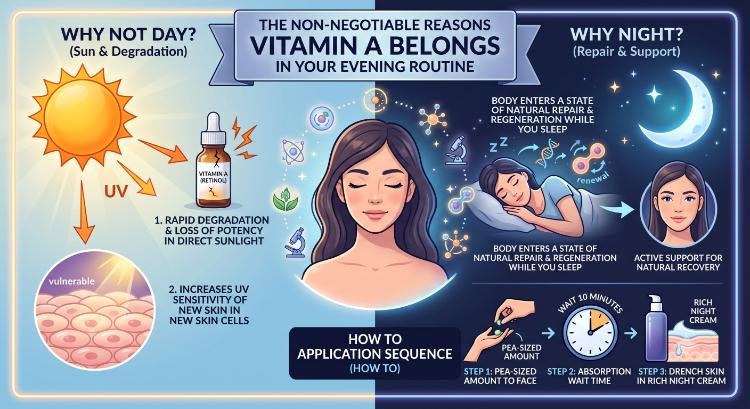
Vitamin A belongs in your evening routine for two very specific and non-negotiable reasons. First, the ingredient degrades rapidly and loses its potency when exposed to direct sunlight. Second, it can make your new skin cells slightly more sensitive to UV damage.
While you sleep, your body naturally enters a state of repair and cellular regeneration. Applying your treatment before bed actively supports this natural recovery process. I apply a pea-sized amount to my face, wait ten minutes, and then drench my skin in a rich night cream.
Can you ever apply them at the same time?
There is a growing trend on social media showing influencers mixing everything together in the palm of their hand. I strongly advise against playing cosmetic chemist at your bathroom sink. Mixing these ingredients directly can easily alter their pH levels, potentially rendering them completely ineffective.
If you are incredibly stubborn and insist on using both at night, you should apply them sequentially. Apply the antioxidant first, as it typically has a very low pH level. You must then wait a full twenty minutes before layering on your cellular turnover treatment.
Honestly, no one has the time or patience to stand around in their pajamas waiting for serums to dry. Splitting them into completely separate morning and evening routines is significantly easier and far more effective. This also ensures that you aren’t overwhelming your face with too many active acids at once.
Building an effective daily routine doesn’t have to cost a fortune, especially if you follow The Ultimate Guide to Budget High Street Skincare at Boots and Superdrug.
Vitamin C and Retinol for Hyperpigmentation
If you are battling stubborn dark spots, incorporating these ingredients into your daily routine is a total game-changer. Using Vitamin C and Retinol for hyperpigmentation tackles discoloration from two completely different angles. It is a highly strategic approach that delivers much faster results than using either product on its own.
During the day, the antioxidant prevents new melanin from forming when you step outside. Meanwhile, your evening treatment works incredibly hard to shed existing, pigmented dead skin cells. Over a period of about twelve weeks, you will see those troublesome brown marks rapidly fading away.
I have seen this specific combination completely transform the complexions of friends who suffered from severe post-acne scarring. To witness the magic, however, you must be absolutely diligent and consistent with your daily sunscreen application.
My Top High-Street Product Picks
You certainly don’t need to max out your credit card at a luxury beauty counter to see real results. The UK high street is currently packed with stable, highly effective active formulations. I have personally tested dozens of budget-friendly options to separate the true heroes from the clever marketing fluff.
Finding the Best Retinol Serum at Boots UK
If you are a complete beginner looking for the best retinol serum Boots UK has to offer, check out No7. Their Pure Retinol 0.3% Night Concentrate is a masterpiece of drugstore engineering. It employs a clever delivery system that gradually releases active ingredients throughout the night.
This slow-release technology completely eliminates the dreaded redness and flaking often associated with potent Vitamin A products. I recommended this exact product to my mother, and her skin tolerated it beautifully from day one. It is frequently available on a “3-for-2” offer, making it an incredibly smart investment for your beauty routine.
Budget-Friendly Brightening at Superdrug
For your morning dose of antioxidants, the high street has truly revolutionized stable formulations. The Me+ Vitamin C Booster from Superdrug is exceptionally effective and costs less than a decent cocktail. It has a slightly watery texture that feels incredibly refreshing on sleepy morning skin.
Another fantastic option is the La Roche-Posay Pure Vitamin C10 Serum, which you can find at most major pharmacies. It contains salicylic acid for gentle exfoliation, making it ideal for anyone battling clogged pores. The texture is silky-smooth, instantly leaving the face looking radiant and luminous.
Managing Dreaded Irritation
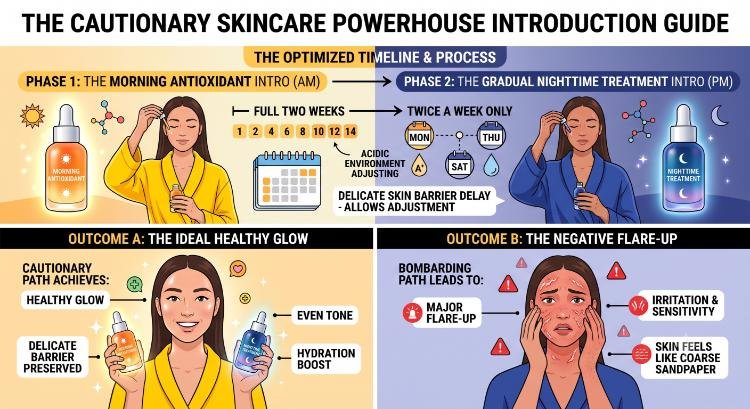
When introducing these two powerhouses to your skincare routine, you should proceed with great caution. Your skin barrier is delicate, and bombarding it with new active ingredients will inevitably lead to a major flare-up. The goal is a healthy glow, not a face that feels like it has been scrubbed with coarse sandpaper.
Start by introducing your morning antioxidant for a full two weeks before purchasing a nighttime treatment. Allow your skin to adjust to the entirely new acidic environment. Once your skin tolerates it well, you can gradually begin adding the evening step twice a week.
The Sandwich Method
If you have extremely sensitive skin, I recommend using the “sandwich method” in the evening. Apply a light layer of a simple moisturizer, wait five minutes, and then apply your active serum. Finally, seal everything in with another generous layer of a richer moisturizer.
This creates a gentle buffer that slows down the absorption rate of potent ingredients. You still reap all the amazing anti-aging benefits, but you significantly reduce the risk of irritating flakiness. It is a brilliant technique that I still use religiously during the freezing, dry winter months.
Our Verdict
The persistent myth that you cannot mix these two legendary ingredients needs to be retired for good. They are an absolute powerhouse duo for achieving a clear, bouncy, and visibly youthful complexion. The secret to success lies entirely in how you structure your daily application routine.
Reserve your radiance-boosting antioxidant strictly for your morning defense against harsh environmental stressors. Let your cellular turnover treatment do the heavy lifting while you sleep soundly. Be patient, respect your skin barrier, and don’t forget to apply your SPF every morning.
To get the best results from your active ingredients, make sure you are incorporating them into one of our targeted Skincare Routines.


2 Comments