
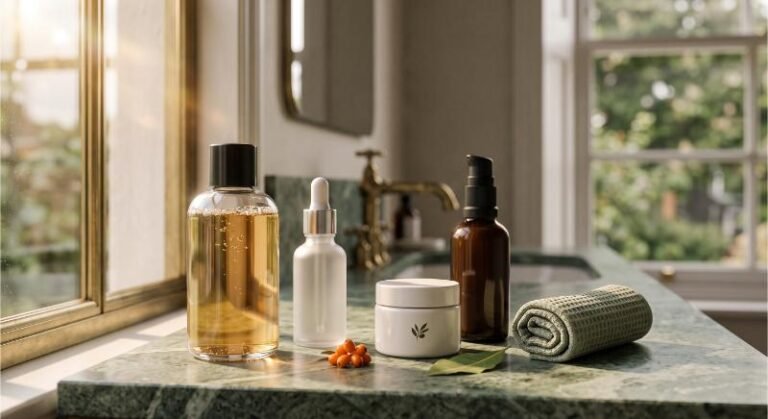
If your bathroom cabinet looks anything like mine, it’s likely packed with small glass dropper bottles promising flawless skin. Working as a beauty journalist means I’m constantly testing new active ingredients, and figuring out which ones play well together can be exhausting. That’s why I decided to write the ultimate guide on how to safely layer Salicylic Acid and Hyaluronic Acid so you can avoid nasty chemical burns.
I’ve spent weeks experimenting with various formulations to find the perfect balance for my acne-prone, easily irritated skin. Walking down the aisles of Boots or Superdrug, you’re bombarded with a dizzying array of acids and humectants. Mixing them incorrectly is the fastest way to compromise your skin’s delicate barrier and trigger a massive breakout.
Today, I’m cutting through the confusing scientific jargon. We’re going to break down exactly how you can safely combine these two skincare powerhouses for a glowing, clear complexion. Grab a cup of tea, and let’s sort out your morning and evening routines.
Why you need both in your skincare arsenal.
You might be wondering why you should bother with multiple serums in the first place. When I first started my skincare journey, I thought an acne wash would solve all my problems. I quickly learned that stripping the skin without replenishing moisture is a recipe for disaster.
These two ingredients work like best friends who perfectly balance out each other’s flaws. One works hard to clear away impurities, while the other steps in to provide comfort and soothing relief. Together, they create an environment where blemishes cannot survive, yet your face never feels tight or uncomfortable.
The Magic of Salicylic Acid
Let’s start with the heavy hitter for blemish-prone skin: Salicylic acid. It is a beta-hydroxy acid—commonly known as BHA—meaning it is completely oil-soluble. Unlike other exfoliants that merely slough off dead skin from the surface, this acid penetrates deep into your pores.
It aggressively dissolves the sticky “glue” that binds dead skin cells and excess sebum together. This action is precisely what prevents blackheads and whiteheads from forming in the first place. If you struggle with a shiny T-zone by midday, a good BHA will prove to be your ultimate savior.
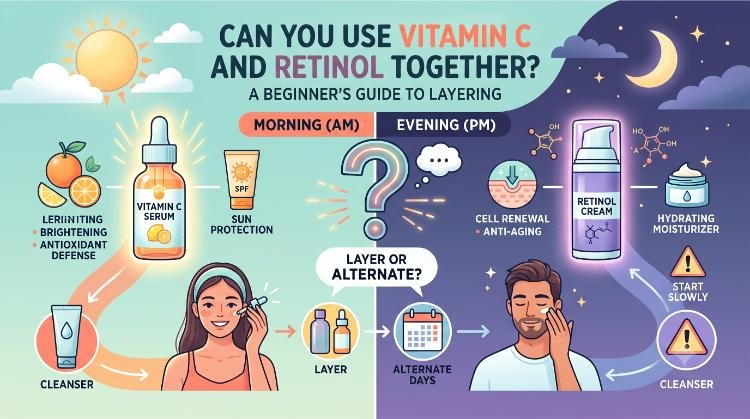
If you’re confused about mixing active ingredients without causing irritation, be sure to read our post: Can You Use Vitamin C and Retinol Together? A Beginner’s Guide.
Hyaluronic Acid’s Plumping and Refreshing Power
On the other hand, we have a true hydration hero. Hyaluronic acid is a large molecule naturally found in our skin that acts like a giant sponge. Its standout quality is its ability to absorb up to a thousand times its own weight in water.
When applied topically, it draws moisture from the air and delivers it directly to your skin’s surface. This instantly makes the skin feel plump and refreshed, masking fine lines and giving you a well-rested, revitalized look. This is a fantastic secret to achieving clear, radiant “glass skin” without relying on heavy makeup.
Can you use salicylic acid with hyaluronic acid?
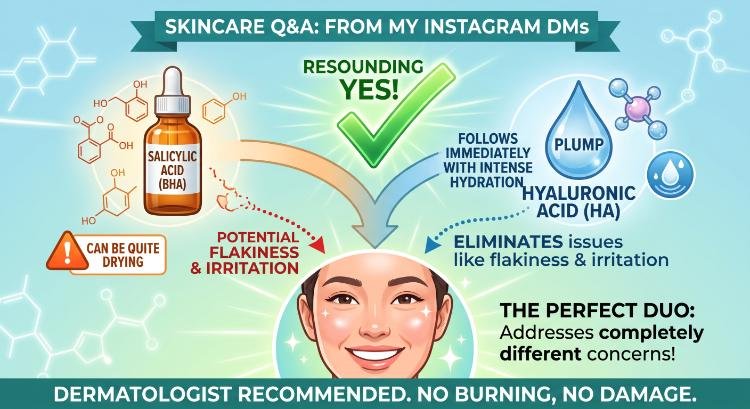
I receive this question in my Instagram DMs at least three times a week. So, can you use salicylic acid alongside hyaluronic acid without burning or damaging your face? The answer is a resounding “yes.”
In fact, dermatologists strongly recommend using them together because they address completely different concerns. Salicylic acid can be quite drying, especially with daily use. By following it immediately with intense hydration, you can completely eliminate potential issues like flakiness or irritation.
Layering Routine: Salicylic Acid and Hyaluronic Acid
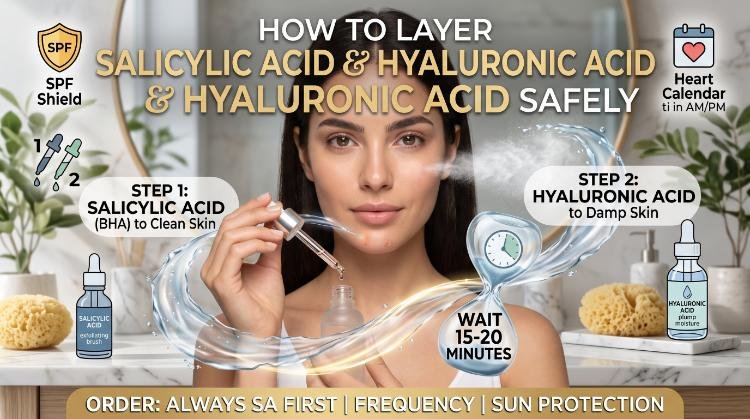
The real secret lies in the order of application. If applied haphazardly, there is a risk that their active ingredients could become completely ineffective. Using salicylic acid and hyaluronic acid in the correct order is what makes the difference between good skin and truly excellent skin.
Step 1: Cleansing
Everything starts with a clean canvas. I always double-cleanse in the evening, using a gentle balm followed by a water-based gel wash. You want your face completely free of makeup, SPF, and urban pollution before applying any expensive serums.
Never rub your face with a harsh towel. I gently pat my skin until it is slightly damp and retains a bit of moisture.
Step 2: BHA Treatment
The golden rule of skincare layering is to move from thinner consistencies to thicker ones. Your exfoliating acid should always go on first. I apply a few drops of my BHA liquid directly onto my fingertips and gently press it into my problem areas.
You should let this layer fully absorb and dry before moving to the next step. I usually wait two to three minutes—often while brushing my teeth. This gives the acid enough time to sink into the pores and dissolve trapped oil.
Step 3: Hydration Station
Now comes the fun part—the best part of the routine. Since hyaluronic acid loves water, you actually want your face to be slightly damp when applying it. I usually give my face a quick mist of thermal spring water over the dried BHA.
Then, I massage a hydrating serum all over, including my neck and under-eye area. You will immediately feel that familiar cooling sensation. Finally, seal everything in with a generous layer of your favorite moisturizer to lock that hydration into the skin.
Finding the Best High-Street Products
You don’t need to spend fifty pounds a bottle to see incredible results. The UK high street currently dominates the active skincare market; some of my all-time favorite formulations cost less than a fancy coffee.
My Top Pick at Boots
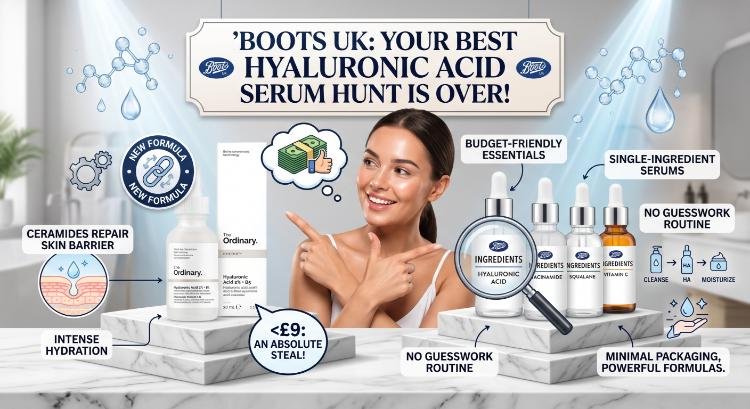
Boots UK offers an incredible selection when hunting for the best hyaluronic acid serum. The Ordinary Hyaluronic Acid 2% + B5 is an absolute steal at under nine pounds. They recently reformulated it to include ceramides, meaning it repairs your skin barrier while providing intense hydration.
For those who want glowing results without the luxury price tag, we highly recommend reading The Ultimate Guide to Budget High Street Skincare at Boots and Superdrug.
I also love the Boots ‘Ingredients’ range for budget-friendly essentials. They offer highly effective, single-ingredient serums that take the guesswork out of building a routine. The packaging is minimal, but the formulas consistently punch above their price point.
Superdrug Offers the Best Salicylic Acid Serum
If you prefer shopping at Superdrug, you are spoiled for choice when it comes to acne treatments. Finding a brilliant salicylic acid serum for acne at Superdrug is incredibly easy thanks to their Me+ range. Their BHA Booster Drops are fantastic for targeting stubborn chin breakouts without causing redness.
I also have to mention the classic CeraVe Blemish Control Gel, which is a staple on their shelves. It combines both BHA and AHA acids with hydrating ceramides in a single tube. It’s a brilliant option if you’re too lazy to apply two separate serums before bed.
Timing Your Application Correctly
Just because you *can* use them together doesn’t mean you *have* to use them together every single day. I always advocate listening to your skin rather than blindly following a rigid schedule. Some complexions can handle daily exfoliation, while others will quickly rebel.
Morning vs. Evening Routine
Personally, I prefer to keep my exfoliating acids strictly in my evening routine. Salicylic acid can make your skin slightly more sensitive to UV rays, so applying it before bed feels safer. It does all the hard work of clearing out my pores while I sleep.
In the morning, I focus entirely on protection and hydration. I splash my face with water, apply hyaluronic acid, and follow up with a generous dollop of SPF 50. This schedule keeps my moisture barrier incredibly strong and completely prevents that tight, shiny forehead look.
Managing Sensitive Skin Reactions
Even when you follow all the rules perfectly, your skin might still get a little irritated. This usually happens when we get a bit overzealous and apply too much product too quickly. Redness, stinging, and small dry patches are all clear warning signs that you need to slow down.
When to Scale Back
If your face starts to sting when you apply your basic moisturizer, your skin barrier is compromised. You need to immediately drop the BHA from your routine for at least a week. Stick to a completely gentle cleanser, your hydrating serum, and a rich, restorative cream until the stinging stops.
When you are ready to reintroduce acids, limit use to just twice a week. Skincare is a marathon, not a sprint; consistent use of mild, gentle products will always yield better long-term results than severely damaging or burning your skin.
Our Verdict
Navigating the daunting world of active skincare doesn’t have to be an intimidating experience. Pairing a hard-working BHA with a soothing humectant is truly one of the smartest moves you can make for acne-prone skin; it allows you to aggressively treat stubborn blemishes without sacrificing your delicate moisture barrier in the process.
The UK high street offers everything you need to build this routine on a tight budget. Always remember to apply your acid to dry skin, let it sink in, and follow up with hydrating moisture. Be patient, listen to your skin’s warning signs, and enjoy your newly balanced, beautifully clear complexion.
If you are wondering exactly when to apply this serum, check out our comprehensive Skincare Routines to see how to layer your products perfectly.
2 Comments