
Managing acne-prone skin requires a careful balance. While you might be tempted to use harsh products to “dry out” pimples, this often backfires, causing irritation and more breakouts. Establishing a consistent and gentle morning routine is crucial for controlling excess oil, preventing clogged pores, and protecting your skin barrier. Finding and sticking to the best morning skin care routine for acne prone skin is an essential step toward achieving a clearer, healthier complexion.
Understanding Acne-Prone Skin
Acne is primarily caused by a combination of factors: excess sebum (oil) production, clogged pores (from dead skin cells and oil), bacteria (Cutibacterium acnes), and inflammation.
A morning routine should focus on gently removing the buildup from overnight, treating active breakouts, and—most importantly—protecting your skin from environmental damage, particularly the sun. Acne treatments often make the skin more sensitive to UV rays, which can worsen inflammation and lead to persistent dark spots (post-inflammatory hyperpigmentation).
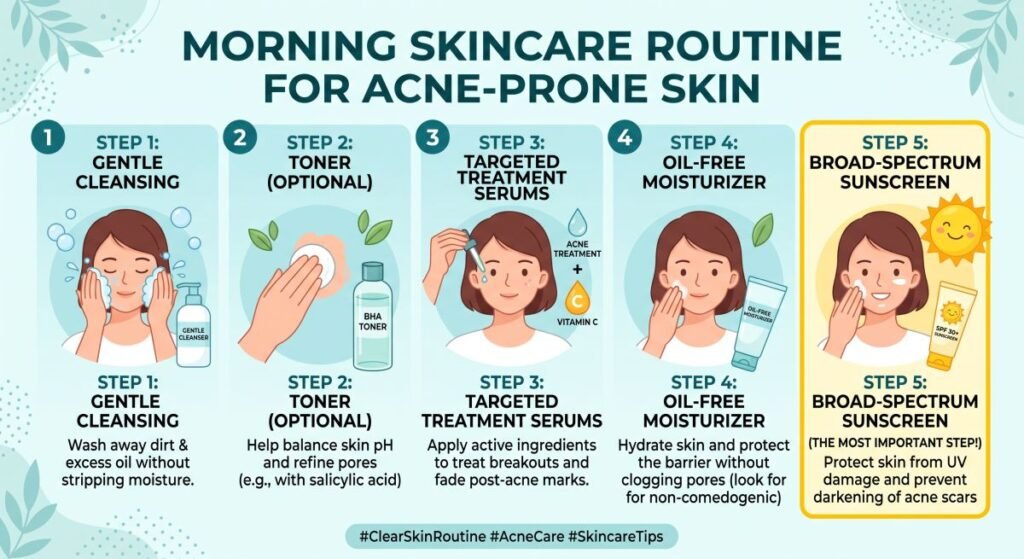
Here is a comprehensive, step-by-step morning skincare routine tailored specifically for acne-prone skin.
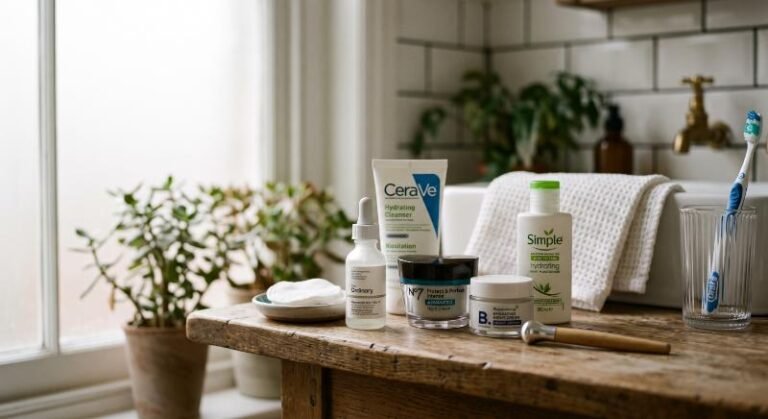
Finding the best affordable products is easier than ever with The Ultimate Guide to Budget High Street Skincare at Boots and Superdrug to help you navigate the aisles.
The Step-by-Step Morning Routine
Step 1: Gentle Cleansing
The first step in any skincare routine is cleansing, but for acne-prone skin, the choice of cleanser is critical. Over-cleansing or using harsh, stripping face washes can damage your skin barrier, leading to increased oil production as your skin tries to compensate.
Instead, opt for a gentle, water-soluble cleanser. Look for formulations that are “non-comedogenic” (won’t clog pores) and “pH-balanced.”
How to cleanse:
- Use lukewarm water. Hot water can strip natural oils.
- Gently massage the cleanser onto your face using circular motions for about 30-60 seconds.
- Avoid aggressive scrubbing, which can irritate existing breakouts.
- Pat your face dry with a clean, soft towel.
If your skin is particularly oily, you might consider a cleanser containing a small percentage of salicylic acid (BHA) to help gently exfoliate dead skin cells within the pores.
Step 2: Toner (Optional)
Toner is not strictly necessary for everyone, but it can be beneficial for acne-prone skin. Modern toners are different from the harsh, alcohol-based astringents of the past. They are designed to balance the skin’s pH, provide a light layer of hydration, and remove any lingering impurities after cleansing.
For acne-prone skin, look for alcohol-free toners containing soothing ingredients like:
- Witch Hazel: Can help refine pores and control oil.
- Tea Tree Oil: Known for its natural antibacterial and anti-inflammatory properties.
- Rose Water: Provides gentle hydration and reduces redness.
Apply toner using a cotton pad gently swept across the face or by patting it directly onto the skin with your hands.
Step 3: Targeted Treatment Serums
This is the treatment phase of your routine, where you apply active ingredients to address specific concerns. The morning is a great time to focus on ingredients that protect the skin and reduce inflammation.
Key Ingredients for Acne-Prone Skin:
- Vitamin C Serum: This is an excellent choice for the morning. Vitamin C is a powerful antioxidant that helps protect the skin from free radical damage caused by pollution and UV rays. It also helps brighten the skin and fade post-acne marks (hyperpigmentation).
- Niacinamide (Vitamin B3): A versatile ingredient that helps regulate oil production, improves the skin barrier function, and reduces the appearance of redness and pores.
- Hyaluronic Acid Serum: If your skin feels dehydrated (common when using acne treatments), a hyaluronic acid serum provides lightweight hydration without clogging pores.
How to apply: Apply a few drops of your chosen serum to clean, slightly damp skin (after toner) and gently press it in. If you are using multiple serums, apply them from thinnest texture to thickest texture. Wait a minute or two for the serum to absorb fully before moving to the next step.
(Self-correction: While salicylic acid is often used for acne, using it heavily in both morning and evening routines can cause irritation. It’s usually best to focus on Vitamin C or niacinamide in the morning and reserve stronger chemical exfoliants like salicylic acid for the evening or use them very sparingly.)
“If you want to clear your pores without drying out your face, don’t miss our step-by-step tutorial on How to Layer Salicylic Acid and Hyaluronic Acid Safely.
Step 4: Oil-Free Moisturizer
A common misconception is that oily or acne-prone skin doesn’t need moisturizer. Skipping this step can actually make acne worse. When your skin is dehydrated, it produces more oil to protect itself, which can lead to clogged pores.
The key is choosing the right moisturizer. Look for lightweight lotions or gels that are:
- Oil-Free
- Non-Comedogenic
- Fragrance-Free (to minimize irritation)
Ingredients like ceramides (to repair the skin barrier) and squalane (a lightweight, non-greasy oil) are excellent choices. A good moisturizer seals in hydration and helps keep your skin barrier strong, making it less susceptible to irritation from acne treatments.
Step 5: Broad-Spectrum Sunscreen (The Most Important Step)
Sunscreen is non-negotiable for every skin type, but it is absolute essential for acne-prone skin.
Why Sunscreen is Vital:
- Many Acne Treatments Cause Sun Sensitivity: Ingredients like retinoids, benzoyl peroxide, and salicylic acid can make your skin more susceptible to sunburn and sun damage.
- UV Rays Worsen Hyper-pigmentation: Sun exposure darkens the red or brown spots (post-inflammatory hyperpigmentation) that pimples leave behind, making them last much longer.
- Sun Damage Causes Inflammation: UV rays trigger inflammation in the skin, which can actually exacerbate acne breakouts.
Choosing the Right Sunscreen: Look for a broad-spectrum sunscreen with SPF 30 or higher.
- Physical (Mineral) Sunscreens: Zinc oxide or titanium dioxide are often well-tolerated by sensitive or acne-prone skin and work by reflecting UV rays.
- Chemical Sunscreens: Look for “oil-free” and “mattifying” formulas if you choose a chemical sunscreen.
Apply sunscreen generously to your face, neck, and any other exposed areas as the final step of your morning routine, at least 15 minutes before sun exposure.
Additional Tips for Managing Acne-Prone Skin
- Consistency is Key: Skincare results take time. Stick to your routine for at least 4-6 weeks before expecting significant results.
- Don’t Pop Pimples: This forces bacteria and debris deeper into the skin, increasing inflammation and leading to scarring.
- Wash Your Pillowcases Regularly: Oil and bacteria from your hair and face build up on your pillowcase.
- Keep Your Hands Off Your Face: Touching your face transfers bacteria and dirt.
- Clean Your Phone: Think about how often your phone touches your cheek!
Our Verdict
Building the best morning skin care routine for acne prone skin doesn’t require dozens of products or complex steps. By focusing on gentle cleansing, targeted treatment with antioxidants, lightweight hydration, and, most importantly, diligent sun protection, you can manage breakouts effectively and promote a healthier complexion.
Remember that every skin type is unique. If your acne is severe, persistent, or causing distress, it is always best to consult with a board-certified dermatologist for a personalized treatment plan.
Adapting your favorite products to the changing British weather is much easier when you follow our tried-and-tested Skincare Routines.

One Comment