
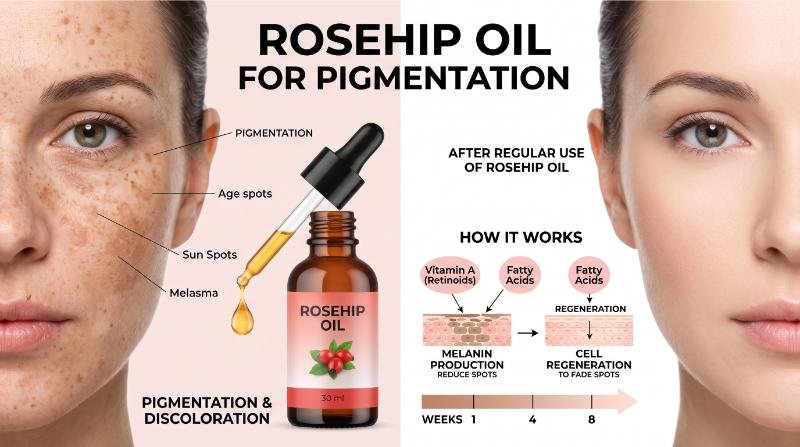
If you’ve spent time staring at stubborn dark spots in the mirror, you’ve probably considered trying rosehip oil for pigmentation. We all know the sheer frustration of finally fixing a nasty breakout, only to be left with a bright red or brown mark that refuses to go away. As a beauty journalist, I receive countless messages asking for these exact post-blemish remedies.
For years, the beauty industry has pushed aggressive acids and stinging peels to fix uneven skin tones. However, the high street has recently seen a massive shift towards gentle, plant-based healing. This amber-colored liquid has quickly become the best-kept secret among skincare fanatics and dermatologists alike.
But does it actually live up to the viral hype, or is it just another passing TikTok trend? I’ve spent the last three months testing out various high-street options on my own acne-prone, hyperpigmented skin. I’ll tell you exactly what I found when I swapped my expensive serum for this natural pharmacy staple.
The truth about dark spots and blemishes
Before we talk about treatments, we need to understand the real problem. Hyperpigmentation occurs when our skin produces extra melanin in response to inflammation, sun damage, or hormonal changes. It’s basically your skin going into overdrive to protect the area that’s been damaged.
The red or purple marks left behind by blemishes are technically called post-inflammatory erythema. Traditional acne scars are actual structural changes, while pigmentation is purely a colour issue on the skin’s surface. To get rid of these discoloured marks you need ingredients that encourage cellular turnover without causing further irritation.
What makes this oil so special?
You might be wondering what sets this particular botanical extract apart from your standard jojoba or argan oil. The magic lies in its incredibly unique chemical composition. It’s packed with all-natural wonders that specifically target damaged, pigmented skin barriers.
Natural Vitamin A Connection
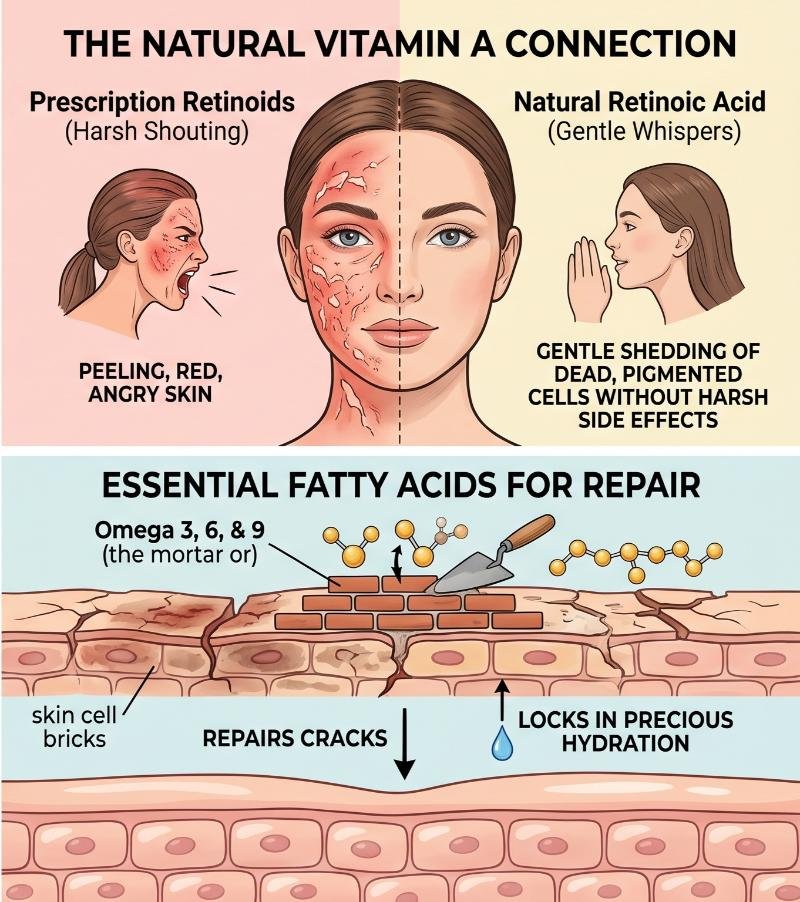
The most powerful weapon in this oil is its naturally occurring retinoic acid, a gentle form of vitamin A. We all know that synthetic retinoids are the gold standard for treating dark spots and aging. However, those prescription creams can leave sensitive skin peeling, red, and irritated.
The natural vitamin A found here encourages your skin to shed dead, oily cells without harsh side effects. It gently whispers to your skin cells to renew themselves instead of aggressively yelling at them. This makes it an absolute dream for anyone whose moisture barrier is already compromised.
Essential Fatty Acids for Repair
In addition to cell turnover, your skin desperately needs building blocks to repair damage. This amber oil is packed with omega 3, 6, and 9 essential fatty acids. These act like lipid mortar, sealing cracks in your skin’s barrier and locking in precious hydration.
If you are feeling overwhelmed by confusing ingredient lists and greenwashing, start by reading our beginner-friendly guide on Understanding Clean Beauty.
High street heroes I’ve personally tested.
You definitely don’t need to spend fifty pounds at a luxury department store to get a high-quality oil. Our local pharmacies are stocking some of the purest, most effective formulations on the market. I scoured my local Boots and Superdrug to put their bestsellers to the ultimate test.
The cult favourite from The Ordinary
When hunting for the best rosehip oil for acne scars, Boots always points me to The Ordinary. Their 100% organic cold-pressed rosehip seed oil costs less than a decent lunch, yet it performs like a luxury skincare product. The texture is noticeably rich and has an earthy scent that proves its nutrients haven’t been stripped away.
I dabbed three drops of this onto my cheeks and chin every single night for a month. Within two weeks, the angry red marks from a recent hormonal breakout were noticeably softer and less inflamed. It absorbs beautifully when pressed onto damp skin, never leaving my pillowcase like a greasy mess.
Botanics Organic Alternative
Another incredible find is the Botanics 100% Organic Nourishing Facial Oil, which is permanently stocked in most Boots stores. While it does contain a blend of oils, the star ingredient shines brilliantly. The packaging comes with a very convenient pipette that dispenses the perfect amount for your entire face.
This formula feels a little lighter than The Ordinary, making it great for those who are afraid of applying oil. It sinks in almost instantly and leaves a beautiful, healthy glow that looks amazing under makeup. I loved using it on days when my skin was feeling especially tight and dry from the winter air.
Rosehip Oil vs. Vitamin C for Hyperpigmentation
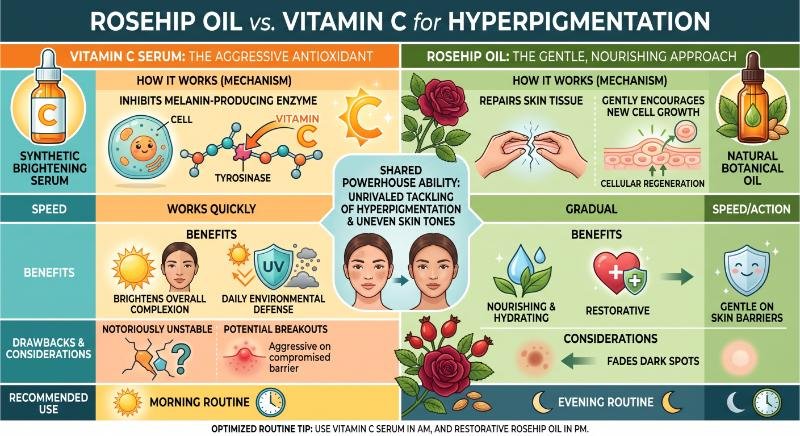
A question I constantly receive in my inbox is how this natural oil compares to synthetic brightening serums. The rosehip oil vs. vitamin C for hyperpigmentation debate is incredibly common among skincare enthusiasts. Both ingredients are absolute powerhouses when it comes to tackling uneven skin tones.
Vitamin C is an aggressive antioxidant that actively inhibits the enzyme responsible for producing melanin. It works quickly to brighten overall complexion and defend against daily environmental damage. However, it’s notoriously unstable and can cause serious breakouts if your skin barrier is compromised even slightly.
Oil, on the other hand, takes a much gentler, nourishing approach to fading dark spots. It focuses on repairing skin tissue and gently encouraging new cells to grow on the surface. I actually like to use a vitamin C serum in the morning and save my restorative oil for my evening routine.
If your complexion needs a quick, budget-friendly boost before a big event, try following our DIY Kitchen Face Mask for Glowing Skin: Easy Homemade Recipes.
Does cold-pressed rosehip oil lighten skin?
When shopping on the high street, you should pay close attention to the extraction methods stated on the label. People often ask me, is cold-pressed rosehip oil more effective at lightening skin than standard oils? The answer is an absolute, undeniable yes.
Heat extraction removes the delicate vitamins and fatty acids that actually do the heavy lifting for your pigmentation. Cold-pressing ensures that all the natural retinoic acid and omegas remain fully intact and potent. If the oil in the bottle is clear instead of a deep golden amber, it’s likely to have been heavily refined and stripped of its goodness.
How to incorporate it into your routine.
The biggest mistake people make with facial oils is applying them at the wrong stage of their routine. Oil can easily penetrate water-based serums and moisturizers, but water can’t penetrate oil. This means your oil should always be the last step in your evening skincare routine.
I start with a double cleanse, followed by a hydrating toner and my usual night cream. Once my moisturizer has absorbed a bit, I warm three drops of the oil between my palms. I then gently press the oil all over my face and neck — never rub it in so that everything is sealed in.
For those with extremely oily skin, you can actually mix a drop directly into your moisturizer. This thins the oil out a bit and keeps it from feeling too heavy on the skin. You’ll still get all the brightening benefits without feeling like you’re wearing a greasy mask to bed.
Setting Realistic Expectations
We live in an era of overnight miracle promises, but true skin healing takes time. So, how long does it take for rosehip oil to fade discoloration on average? You should commit to using it consistently for at least six to eight weeks before you can expect dramatic results.
Your skin runs on a 28-day cellular turnover cycle. You need to let the sebaceous cells naturally shed and be replaced with fresh, healthy skin. Take a picture on day one, and I guarantee you’ll notice a difference by week eight.
Dealing with the Fear of Breakouts
Applying oil to a blemish-prone face may seem completely counterintuitive. However, this particular botanical extract is rated zero on the comedogenic scale. This means it’s very unlikely to clog your pores or cause new breakouts.
In fact, many people with acne produce sebum that’s severely deficient in linoleic acid. This oil is incredibly rich in linoleic acid, which helps balance your natural sebum production. By giving your skin the healthy oils it craves, it often prevents the overproduction of thick oils that cause congestion.
Our verdict
Dealing with stubborn post-blemish scars can be incredibly frustrating, but you don’t need aggressive treatments to see results. The UK high street is full of affordable, cold-pressed options that genuinely deliver on their promises. The Ordinary is my top pick for its unbeatable price point and powerful, clay-based formulation.
This golden liquid will completely transform your skin’s texture and tone if you’re patient and consistent. It repairs the moisture barrier while gently clearing away those stubborn dark spots that are ruining your confidence. Next time you’re browsing the aisles at Boots, do yourself a huge favour and pick up a bottle.
Whether you are looking for effective DIY remedies or clean beauty brand swaps, you can find plenty of inspiration in our Natural Wellness category.
2 Comments